
☰
Your information will not be shared. Safe Spray will send you a custom estimate.
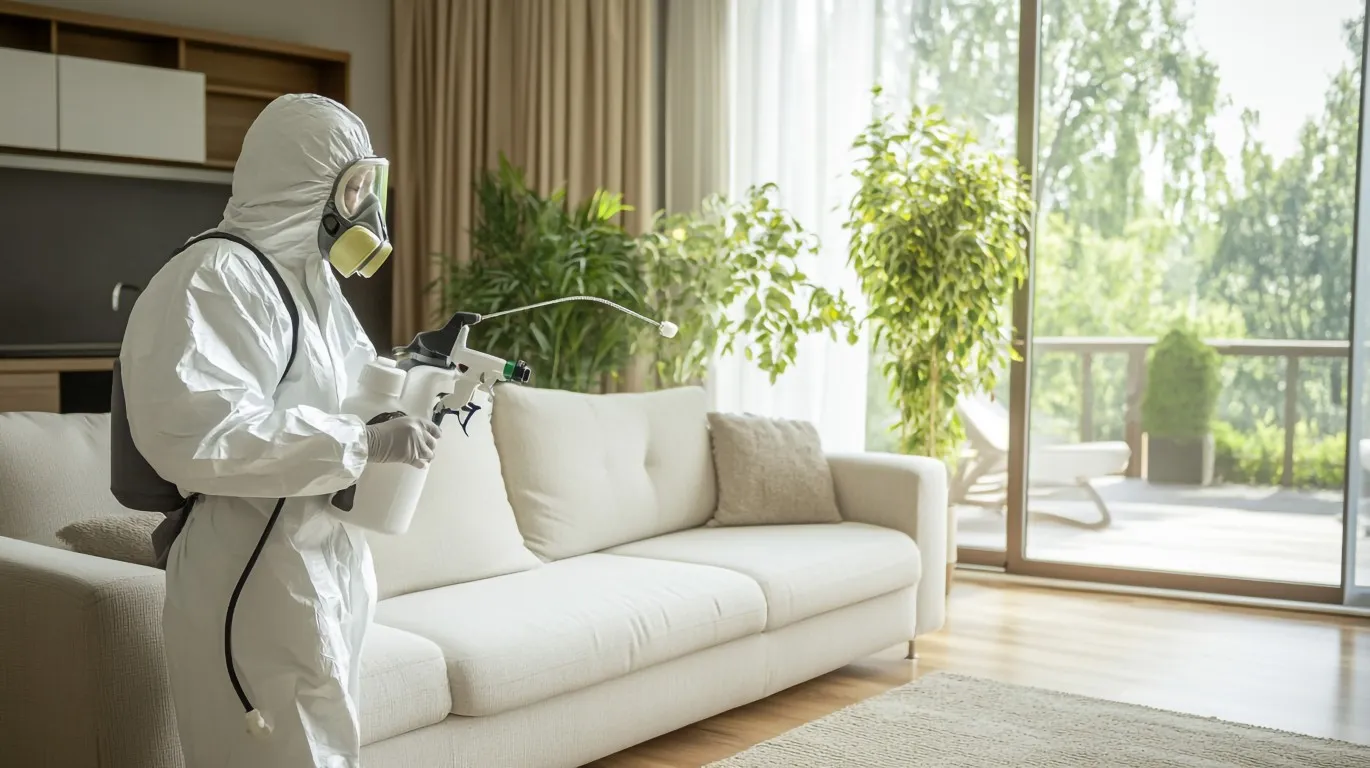
Someone in your house just got over the flu, a cold, or another contagious illness, now what? Short answer: yes, it’s worth taking the time to disinfect your home, and you don’t need a full day to do it right. Clean and disinfect high-touch surfaces, wash anything that touches the sick person’s face, hands, or nose, and give the house some fresh air. This guide walks through the whole process: how to sanitize your home while someone’s still sick, how long germs actually survive once they’re better, how long do germs live on surfaces, exactly what to clean afterward, and the everyday habits that keep the next round of germs from taking hold in the first place.
Key Takeaways
✓ Disinfecting after an illness doesn’t take all day, focus on high-touch surfaces first, then wash anything that touches the sick person’s face or hands, and air out the house.
✓ Start protecting the household before the sick person recovers: wash hands often, wear a mask around them, and avoid sharing cups, plates, or blankets.
✓ Germ survival time varies a lot by illness, flu lasts up to 24–48 hours on hard surfaces, the common cold up to a week, and C. diff spores even longer.
✓ EPA-registered disinfectants, diluted bleach, or 70%+ alcohol are the most reliable options; natural alternatives like vinegar are weaker against viruses specifically.
✓ A normal hot-water wash (or a full dryer cycle) is enough for bedding and soft surfaces, no special treatment needed.
✓ Opening a window helps by exchanging stale air for fresh air: cold air doesn’t actually kill germs, that’s a myth.
When someone in your household is sick, they shed the virus or bacteria that’s making them ill onto everything they touch, door handles, phones, the remote, faucet handles, shared utensils. Those germs don’t disappear the moment symptoms do. Depending on the illness, they can sit on a surface for anywhere from a few hours to several days, even months, in a few unusual cases, waiting for the next person to touch it and then touch their face.
Disinfecting your home after illness breaks that chain. It matters most for anyone else in the household who’s more vulnerable to getting sick: young children, older adults, and anyone with a weakened immune system. And because reinfection and secondary infections are genuinely possible even within the same household, disinfecting isn’t just about tidiness, it’s a meaningful part of protecting everyone still living there.
You don’t have to wait until everyone’s fully recovered to start protecting the rest of the household, in fact, the most effective window is while the sick person is still contagious.
None of this replaces the deeper clean you’ll want to do once the illness has passed, it just narrows how far it spreads in the meantime.
This is the question behind most of the searches on this topic, and the honest answer is: it depends on the specific illness, the surface it landed on, and the environment. In general, germs survive longer on hard, nonporous surfaces (plastic, stainless steel, laminate countertops) than on soft, porous ones (fabric, cardboard, tissues), and heat, humidity, and how much virus or bacteria landed there in the first place all play a role too.
Here’s the general picture, based on CDC guidance and published clinical estimates for the illnesses people search about most:
| Illness / germ | Hard surfaces (doorknobs, counters, phones) | Soft surfaces (fabric, bedding, tissues) |
|---|---|---|
| Flu (influenza) | Up to 24–48 hours | Generally well under 24 hours |
| Common cold (rhinovirus) | Can persist up to a week, but loses most of its ability to infect after the first 24 hours | A few hours |
| RSV | Roughly 4–12 hours, depending on the study | About 1–2 hours; closer to 30 minutes on hands |
| Strep throat (bacteria) | Estimates range from several hours up to a couple of days | Typically well under 24 hours |
| Coronaviruses (common cold-causing strains) | A few hours up to a few days | Generally a few hours |
| Common bacteria (E. coli, Salmonella) | Roughly 20 minutes up to about 4 hours | Generally shorter than on hard surfaces |
| C. diff spores | Can persist for months in some estimates | Less standardized, but notably persistent |
A quick note on that last one: C. diff isn’t something most households deal with from a typical cold or flu, but it’s worth knowing that its spores are unusually hardy, most everyday surface wipes aren’t strong enough to kill them. If C. diff is a concern (say, after a hospital stay or a GI illness in the family), you’ll want a bleach-based, EPA-registered product specifically labeled as sporicidal, not just a general-purpose disinfecting wipe.
You don’t need anything exotic, most of what works is probably already under your sink.
One detail almost everyone skips: contact time. Most disinfectants need to stay visibly wet on a surface for a specific number of minutes to actually work, check the product label rather than wiping it dry right away. And to answer the most common version of this question directly: yes, EPA-registered bleach and alcohol-based products are effective at killing the flu virus on surfaces, when used according to the label.
Once the illness has passed, it’s time for the deeper clean. Start with your hands, wash them before and after, so you’re not just redistributing germs around the house.
These get extra attention since they’re used constantly:
Couches, rugs, and upholstered chairs can’t go through the wash, so a HEPA-filter vacuum or a steam cleaner is your best option. If a fabric item is actually machine-washable, a removable couch cover, a throw blanket, treat it the same as bedding.
Open windows and run fans for a while, especially in the room where the sick person spent the most time. This isn’t about temperature, it’s about air exchange, diluting and clearing airborne particles out of the space.
| Does cold air kill germs?
Not really, if anything, some viruses survive longer in cold, dry conditions. The benefit of airing out a house isn’t the cold, it’s simply swapping stale, particle-laden indoor air for fresh air from outside. |
Anything that touches the sick person’s face, hands, or nose is worth washing separately: sheets, pillowcases, towels, pajamas, and, easy to forget, stuffed animals and blankets that kids sneeze or wipe their nose into.
To directly answer the two versions of this question people ask most, how long do flu germs live on bedding, and how long do cold germs live on bedding, both viruses behave the same way here as they do on other soft, porous surfaces: meaningfully shorter than on hard surfaces, generally just a few hours rather than days. That’s good news: it means a normal wash, done reasonably promptly, is enough to handle it.
If you’d rather not reach for bleach, it’s worth knowing the honest trade-off before you commit to disinfecting your house after the flu naturally. Products like vinegar, baking soda, and hydrogen peroxide are non-toxic and generally safer around kids and pets, genuinely appealing if you’re managing allergies or just prefer to avoid harsh chemicals.
The catch: their track record against viruses specifically is weaker than EPA-registered disinfectants. Does vinegar kill the flu virus? Not reliably, it can handle certain bacteria reasonably well, but viruses like the ones that cause the flu and common cold are more resilient and typically need something stronger. The same goes for most vinegar- and hydrogen-peroxide-based DIY sprays.
If a natural approach matters to you, look for products or DIY solutions built around thymol (a thyme-derived compound) or citric acid (often derived from lemon), both have meaningfully better evidence against viruses than plain vinegar, and several EPA-registered “natural” disinfectants use one of the two as their active ingredient.
A one-time deep clean matters, but the households that get sick least often tend to have a few simple habits built into the routine, sick or not:
None of this requires disinfectant-grade cleaning every day, it’s really just about not letting germs accumulate long enough to become a problem, which is a big part of how cleaning your home consistently can help prevent illness in the first place, not just clean up after it.
Not usually right away, your body builds short-term immunity to the specific strain you just fought off. But there are dozens of cold and flu strains circulating in any given season, so it’s entirely possible to catch a different one within weeks of recovering. That’s part of why disinfecting matters even after you personally feel fine: you’re protecting the rest of the household from whatever’s still on the surfaces you touched.
CDC guidance for the flu is to stay home until you’ve been fever-free for at least 24 hours without the help of fever-reducing medication. For a common cold, there’s no official rule, but the same general idea applies: if you’re still feeling noticeably unwell or symptomatic, it’s worth staying home a bit longer.
Generally yes, a warm shower is fine, and the steam can even help ease congestion. There’s no disinfecting reason to avoid one; if anything, it’s one less thing for germs to linger on compared with staying in the same clothes and bedding.
Give it a few extra days rather than stopping the moment symptoms disappear. Some viruses, the common cold in particular, can remain viable on surfaces for close to a week even after the person who had it is symptom-free. A final, more thorough clean once everyone in the house is fully recovered is a reasonable place to stop.
We also offer a no obligation, free onsite service estimate.
 Get a free Consultation